
How Azra Games built the RPG UnGodly on Unity 6.3 LTS for the foldable iPhone
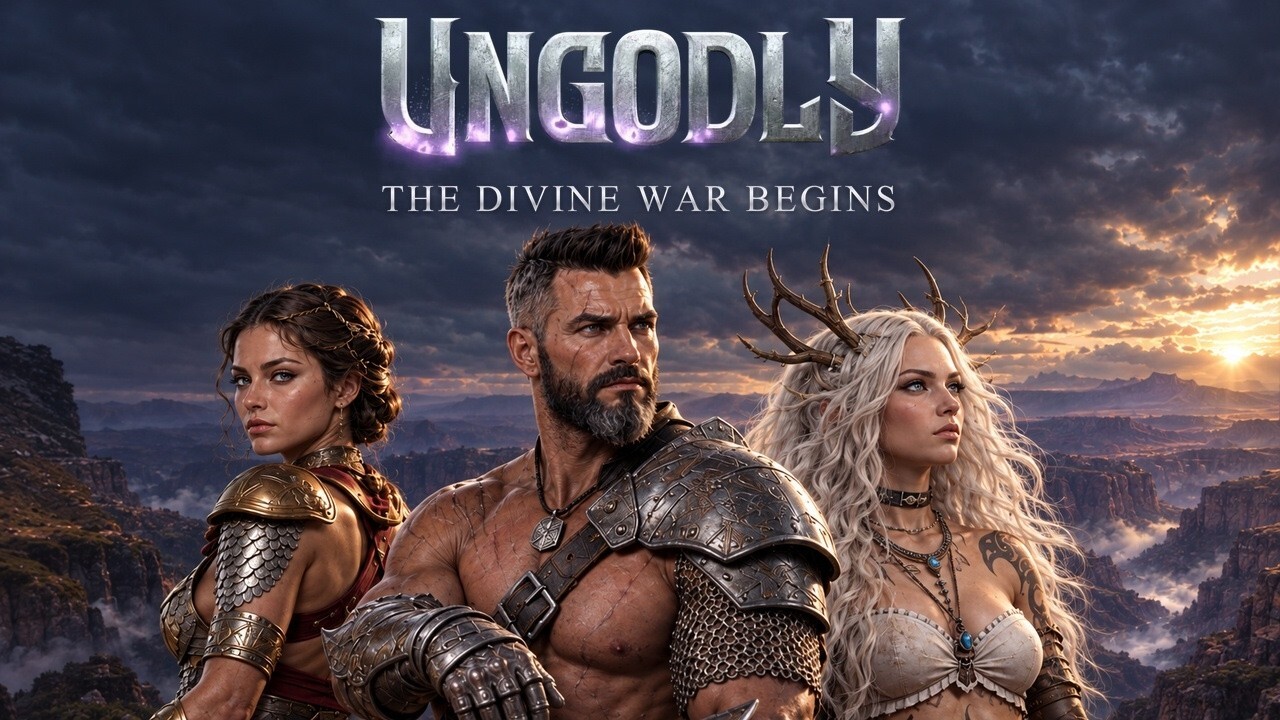
Studio Azra Games has described the technical foundation of its dark-fantasy RPG UnGodly. The game was built on Unity 6.3 LTS with the Universal Render Pipeline and Forward+ rendering. It already runs on iPhone, the foldable iPhone Duo, Mac, Google Play Games on PC and Apple Vision Pro. On iPhone Duo and iPhone 18 Pro the game delivers up to 60 frames per second and adapts to both the folded and unfolded screen.
The studio explained how it combines baked and dynamic light, how it organizes the growing asset library of a live game, and what it took to support a foldable screen. The details were published as a guest post on the Unity blog. Its author is Philip Bang, Vice President and General Manager of UnGodly at Azra Games.
Light is split between baking and real time
In UnGodly the player controls a squad of four Primals characters and switches between them in real time. In combat several heroes, enemies and visual effects are active at once, including the finishing Essence Burst moves. According to Bang, the team's main technical challenge was to keep the real-time combat responsive without losing spectacle. The player must be able to read the opponent's attacks and dodge precisely while the world around stays dense and alive.
Forward+ in URP, Bang writes, gives flexibility for dynamic lighting and visual effects — from atmospheric locations and massive architecture to battles with spectacular abilities. The studio combines baked light with dynamic light to create the game's distinctive atmosphere while keeping render costs under control. That balance matters most in combat scenes. The render pipeline, the author says, lets artists and engineers deliberately decide where visual complexity matters and where performance takes priority.
The second half of the challenge is content management. The studio organizes its growing library of characters, locations, animations and effects with the Addressables system. UnGodly is conceived as a live game with years of updates ahead. Among the nearest plans: in December Conan the Barbarian joins the game as a guest character.
A foldable screen instead of a fixed orientation
For iPhone Duo, the first foldable iPhone, the team wired up iOS 27 Auto Resizability. The game adapts to the folded and unfolded screen, and you can fight in both portrait and landscape orientation. The interface is not yet fully adapted: according to Bang, the studio continues to expand support for both orientations in the interface.
As GamesBeat writes, UnGodly was shown at the Apple presentation where the iPhone 18 Pro Max and iPhone Duo were unveiled. According to the outlet, the studio worked closely with Apple's platform team ahead of the announcement.
“The gap between mobile and console RPGs is now defined less by what the hardware can do than by what developers decide to build.”
That is how Philip Bang assessed the situation in his post.
One foundation for different platforms
Azra Games was founded in 2022 by Mark Otero, the creator of Star Wars: Galaxy of Heroes at Electronic Arts. The studio aims at a “fourth generation” of mobile RPGs: combining the accessibility and long progression of mobile collection RPGs with the combat, staging and image quality of console games. Controls, interface and performance, according to Bang, require separate work for each platform, but Unity's multiplatform nature allows UnGodly to be brought to new devices without completely reworking the game for each one. The studio is also planning releases on the Galaxy Store and ONE Store.
What is useful here for other teams
The “baked light plus Forward+ for dynamics” scheme itself is nothing new in mobile development. More useful, it appears, is that the studio names a specific engine version and the performance level on specific devices. For teams choosing a pipeline for a mobile project with console ambitions, this can serve as a reference point. That said, the post contains no figures on memory consumption, the number of light sources in a frame, or the game's behavior on weak Android devices. It is also unclear how Forward+ behaves with a large number of dynamic light sources on mobile hardware.
Foldable devices are the more concrete lesson. On Android, large and foldable screens have run in multi-window mode by default since Android 12. If an app is rigidly tied to an orientation or cannot resize, the system puts it into compatibility mode and scales the picture. Unity's documentation describes a separate window resizing setting for such cases. The UnGodly example shows that on iPhone Duo the main burden probably falls on interface design: that is precisely what the studio is still refining. For UI artists this most likely means laying out menu screens in two layouts.
Vision Pro support also requires separate investment. At launch in 2024, official visionOS support in Unity was available to Unity Pro, Enterprise and Industry subscribers. So the claimed shared foundation for all platforms probably implies the corresponding license tier and separate work for the headset format.
Why did the studio bet on Unity 6.3 and URP with Forward+: engine maturity, cooperation with Apple, a wager on multiplatform reach?